

Written by Ben Chuang
Quick Navigation
What to Wear to a Job Interview: Men's Quick Guide
The rule: dress one level above the company's daily dress code. If employees wear jeans, you wear chinos. If they wear chinos, you wear dress trousers. If you're unsure — default to business casual.
| Industry / Role | What to Wear |
|---|---|
| Finance / Law / Banking | Dark suit + white dress shirt + tie + black Oxford shoes |
| Corporate / business | Navy or charcoal suit + dress shirt + tie optional |
| Marketing / media / sales | Blazer + dress shirt + chinos + loafers |
| Tech / startup | Smart casual — Oxford shirt + dark chinos + clean leather shoes |
| Creative / design | Smart casual with personality — fitted shirt + dark jeans + boots |
| Unsure / safe default | Business casual — dress shirt + chinos + blazer + loafers |

Your interview outfit won't get you the job — but the wrong one can cost you it. Hiring managers form first impressions within seconds and your clothes are part of that signal before you've said a word. The goal isn't to look expensive or fashionable. It's to look like you already belong at the company and take the opportunity seriously.
This guide gives you specific outfit formulas by industry so you know exactly what to wear regardless of the role you're interviewing for.
Interview Outfits for Men by Industry
The biggest mistake men make when dressing for interviews is treating every role the same. A full suit at a tech startup signals you don't understand the culture. Jeans at a law firm signals you don't take it seriously. Here's exactly what to wear for each industry:
Finance, Law, Banking & Consulting
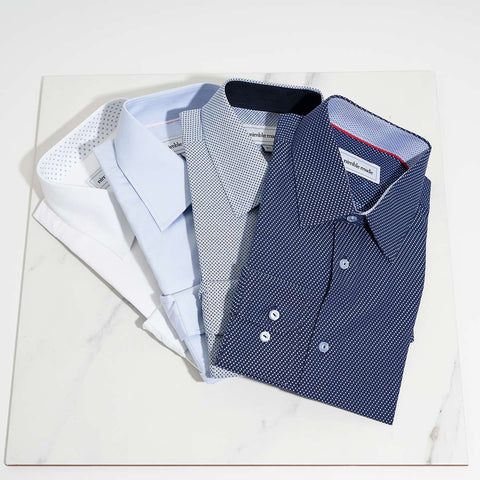
These are the most conservative interview environments — dress code expectations are high and appearance signals whether you understand the professional standards of the industry. There is almost no such thing as overdressed here.
| Piece | What to Wear |
|---|---|
| Suit | Navy or charcoal — avoid black (too funereal) and light grey (too casual) |
| Shirt | White slim fit dress shirt — always. Light blue as alternative. |
| Tie | Solid navy, burgundy, or subtle pattern — silk, conservative width |
| Shoes | Black Oxford or cap-toe derby — polished, no scuffs |
| Belt | Black leather — matches shoes exactly |
Read our separate guide to accounting dress code
.
Corporate / Business Professional
Similar to finance but with slightly more flexibility. A suit is still expected but you have more latitude on tie and shoe color. Navy suit, white dress shirt, and leather Oxford shoes is the reliable formula that works for any corporate outfit.
Marketing, Media, Sales & PR

Business casual to smart casual — professional enough to signal you take it seriously, relaxed enough to show you understand the culture. A blazer over a dress shirt is your anchor piece here — it elevates without being stiff.
- Navy or grey blazer + white or light blue dress shirt + dark chinos + loafers
- Or: Smart blazer + Oxford shirt + dark slim jeans + clean leather shoes
- Tie: Usually not needed — open collar reads as culturally aware
Technology & Startups

Smart casual is the sweet spot — showing up in a full suit signals you don't understand the culture, but showing up in a t-shirt signals you're not taking it seriously. The goal is deliberate and polished without formal.
- Oxford shirt or neat OCBD + slim dark chinos + leather sneakers or loafers
- Or: Smart casual — fitted shirt + dark jeans + Chelsea boots
- Avoid: Full suit, tie, formal dress shoes — reads as out of touch with tech culture
Creative, Design & Fashion

The most flexible dress code — but "flexible" doesn't mean casual. Creative industries want to see that you have a personal aesthetic and understand style, not that you didn't bother to dress for the interview.
- Fitted shirt or well-chosen top + dark slim jeans or tailored trousers + boots or interesting shoes
- One distinctive piece is fine — an unusual blazer, interesting shoes, or a statement accessory
- Avoid: Anything that looks like you tried too hard or too little
Healthcare, Education & Government

Conservative business casual is the standard across all three. These environments reward looking clean, professional, and non-distracting — the interview panel is focused on your qualifications, not your fashion sense.
- Navy or charcoal blazer + white or light blue dress shirt + dress trousers + Oxford shoes
- Tie optional but appropriate — signals respect for the institution
- Avoid: Anything too casual, loud colors, or heavily patterned shirts
Retail, Hospitality & Service Industries
Smart casual — one level above what customers or guests would wear. A neat collared shirt with dark chinos and clean leather shoes is the reliable formula. You don't need a suit or blazer but you absolutely need a collar.
Interview Outfit by Dress Code Level
| Dress Code | What to Wear | Typical Industries |
|---|---|---|
| Business formal | Dark suit + white dress shirt + tie + black Oxford shoes | Finance, law, banking, government |
| Business casual | Blazer + dress shirt + chinos or dress trousers + loafers | Corporate, marketing, sales, most office roles |
| Smart casual | Oxford shirt + dark chinos + clean leather shoes — blazer optional | Tech, startups, creative agencies |
| Casual (rare for interviews) | Still dress one level up — neat shirt + dark jeans + clean shoes | Some startups, creative roles |
| Unsure | Business casual — always appropriate, never overdressed for office roles | Any industry when dress code is unclear |
The one rule that always applies: dress one level above the company's daily standard. It shows respect for the opportunity without signaling you don't understand the culture.
Interview Outfits for Slim Men: Why Fit Is the First Rule

Every piece of advice above applies to slim frames — but the execution is different. Standard off-the-rack suits and dress shirts are cut for average or athletic builds, which means slim guys end up interviewing in clothes that pool at the waist, bunch at the chest, and undermine the entire professional signal they're trying to send.
The interviewers won't consciously think "that suit doesn't fit" — but they will unconsciously register "something's off." Fit communicates confidence, preparation, and attention to detail. A poorly fitted suit communicates the opposite regardless of how expensive it was.
| Piece | Common Slim Guy Problem | The Fix |
|---|---|---|
| Dress shirt | Excess fabric at waist bunches when tucked — looks sloppy | Buy slim fit specifically — Nimble Made sized by height and weight |
| Suit jacket | Too wide in shoulders, boxy through chest | Try before buying or go slim/tailored cut — fit over brand |
| Trousers | Too wide through thigh — looks baggy even when waist fits | Slim or tailored cut — have hemmed to the right break |
| Blazer | Drops off shoulders, hangs loose at sides | Slim fit or structured blazer — shoulder seam must sit at shoulder |
| Tie | Standard width ties look overwhelming on slim frames | Slim tie — proportional to the lapel width of your suit |
Start with the dress shirt — it's the most visible piece and the one where fit is most immediately obvious. Nimble Made's slim fit dress shirts are cut specifically for slim and slim-tall frames — fitted through the chest and waist without pulling, long enough to stay tucked through an entire interview.
Use the fit guide to find your size by height and weight rather than guessing at neck measurements.
What NOT to Wear to a Job Interview
| Avoid | Why |
|---|---|
| Ill-fitting clothes | The single biggest mistake — poor fit undermines everything else |
| Wrinkled or stained shirt | Signals carelessness — iron or steam the night before, not morning of |
| Strong cologne or aftershave | Close-quarters interviews amplify scent — subtle or none |
| Loud or busy patterns | Draws attention to the outfit rather than you — keep patterns subtle |
| Casual footwear | Trainers, boots with heavy soles, or scuffed shoes read as unprepared |
| Brand logos or graphic elements | Distracting and casual — keep everything clean and logo-free |
| Overly trendy pieces | Classic beats fashion-forward in interview settings — you want to be memorable for your answers, not your outfit |
| New shoes you haven't broken in | Discomfort shows in how you walk and sit — wear them before the interview |
The Small Details That Quietly Matter
Interviewers won't consciously notice these details — but they will notice when they're wrong. These are the finishing touches that separate a good interview outfit from a great one:
- Belt matches shoes — black shoes with black belt, brown shoes with brown belt. This is a basic signal of attention to detail that interviewers register subconsciously.
- Shirt stays tucked — a shirt that comes untucked during the interview is distracting and signals poor preparation. Use a slim fit shirt with a long enough tail, or shirt stays if needed.
- Collar stays in — a collar that curls or lifts looks sloppy. Use collar stays to keep it flat and sharp for the full interview.
- Shoes are polished — scuffed or dull leather shoes undermine an otherwise sharp outfit. Polish them the night before.
- Watch is appropriate — a classic dress watch or clean metal bracelet is fine. Avoid sports watches or smartwatches in formal interview contexts.
- Jacket is pressed — wrinkles in a suit jacket are immediately visible. Steam or dry clean before any formal interview.
- Grooming is clean — hair, nails, and facial hair all matter. Clean and neat is the standard regardless of style.

FAQs: What to Wear to a Job Interview
What should a man wear to a job interview?
It depends on the industry — but business casual is the safe default for most interviews. A slim fit dress shirt, dark chinos or dress trousers, a blazer, and leather shoes covers virtually any office interview scenario. For corporate or finance roles, upgrade to a full suit. For tech or creative roles, smart casual is more appropriate. When in doubt, dress one level above the company's daily standard.
Is it OK to wear a suit to every interview?
No — a full suit at a startup or creative agency signals you don't understand the company culture, which is a red flag for cultural fit. Research the company's dress code before your interview. LinkedIn photos of employees, the company website, and Glassdoor reviews all give clues about how people dress day-to-day. Then dress one level above that.
Should I wear a tie to a job interview?
Only for formal industries — finance, law, banking, and conservative corporate environments. For most other roles, an open collar under a blazer or suit reads as confident and appropriately modern rather than underdressed. See our full guide on whether to wear a tie to an interview for a more detailed breakdown by industry.
What color should I wear to an interview?
Navy, charcoal, grey, and white are the most reliable interview colors — they read as professional, trustworthy, and non-distracting. Navy is the strongest suit color for interviews. White or light blue for the dress shirt. Avoid bright colors, loud patterns, or anything that draws attention away from what you're saying. For a full breakdown by color and what each signals, see our guide on best colors to wear for an interview.
What should slim men wear to a job interview?
The same outfit formulas as everyone else — but in slim fit cuts specifically. Standard dress shirts and suits are cut for average builds, so slim guys end up in clothes that pool at the waist and bunch at the chest, which undermines the professional signal. Start with a slim fit dress shirt that sits flat under a blazer without excess fabric. Nimble Made's shirts are sized by height and weight specifically for slim frames — use the fit guide to find your exact size.
What should I wear to a virtual or Zoom interview?
Treat a Zoom interview the same as an in-person one — at minimum business casual. The camera only shows your upper half, which actually means your shirt and collar are under more scrutiny than usual. See our full Zoom interview attire guide for color and background recommendations specific to video interviews.
What's the difference between interview attire for men vs women?
The principles are the same — dress one level above the company's standard, keep it clean and non-distracting, fit matters more than brand. The specific pieces differ but the framework is identical. This guide focuses on men's interview attire specifically.
More Interview & Career Style Guides
- Best Colors to Wear for an Interview — what each color signals to interviewers
- Should I Wear a Tie to an Interview? — by industry and role type
- What to Wear to a Zoom or Video Interview — camera-specific advice
- What to Wear to a Job Fair - event-based job conferences or fairs
- What Is Business Casual for Men? — the most common interview dress code explained
- Smart Casual Dress Code for Men — for tech and startup interviews
- How a Dress Shirt Should Fit — fit guide for the most important interview piece
Comments (0)
Back to News